Who Should Get a Full-Body MRI? Age, Family History, Risk Factors and Health Goals
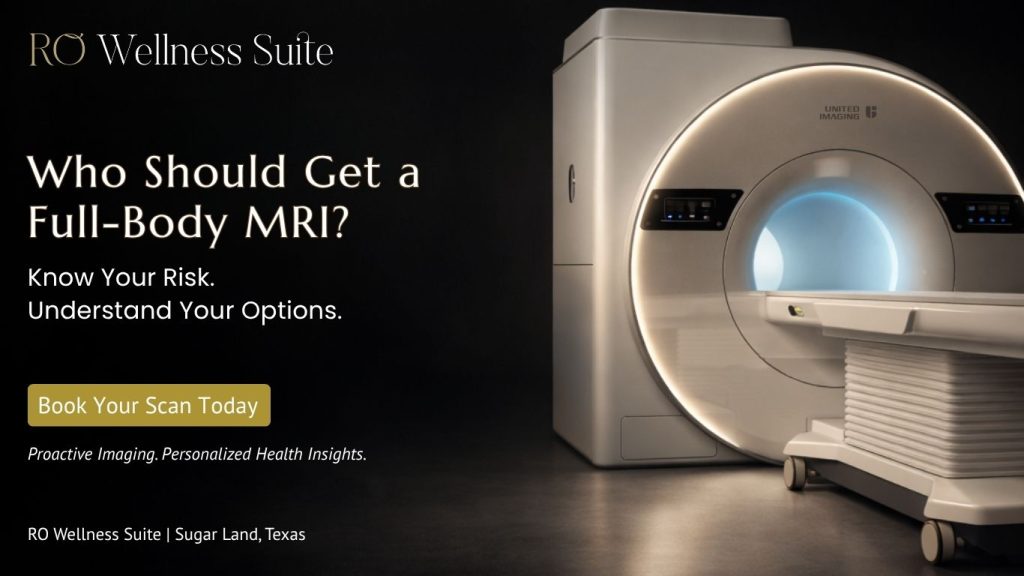
A Full-Body MRI may be worth discussing with a qualified healthcare professional when personal health history, family history, genetic risk, symptoms, or specific health goals make comprehensive imaging appropriate. It can provide a broader view of multiple areas of the body than a targeted MRI and may help identify abnormalities that warrant further evaluation. However, age alone does not determine whether someone needs a Full-Body MRI. The right decision depends on individual risk, medical history, current health concerns, existing screening recommendations, and personal preventive health goals.
Who Should Get a Full-Body MRI?
A Full-Body MRI is not a one-size-fits-all screening test. The people most likely to benefit are those whose personal health history, family history, genetic risk, symptoms, or preventive health goals make broader imaging clinically relevant. A healthcare professional can help determine whether a whole-body MRI adds meaningful information beyond routine checkups and recommended screenings.
Who May Benefit From a Full-Body MRI?
A Full-Body MRI may be worth discussing with a healthcare professional if you fall into one or more of these groups:
People with a relevant family history
A strong family history of certain cancers or other serious conditions can change an individual’s risk profile. In these situations, a clinician may consider whether additional imaging is appropriate alongside genetic counseling, routine screening, or other preventive measures.
People with known cancer-predisposition syndromes
Some inherited conditions significantly increase the risk of developing certain cancers. For people with established cancer-predisposition syndromes, whole-body MRI can have a more defined role as part of a medically supervised surveillance strategy.
People with specific risk factors
Personal medical history, previous cancer, genetic findings, or other recognized risk factors may influence whether broader imaging is appropriate. The decision should always consider the individual’s overall health history rather than a single risk factor in isolation.
People seeking comprehensive preventive health information
Some health-conscious adults want a broader understanding of their health beyond routine laboratory testing and physical examinations. A Full-Body MRI can provide imaging information across multiple areas of the body. However, it should complement—not replace—routine preventive care and recommended, condition-specific screening.
People who want a baseline assessment
Some individuals may consider comprehensive imaging to establish a baseline for future comparison. Whether a baseline scan is useful depends on the person’s age, medical history, risk profile, and plans for appropriate follow-up if an abnormality is identified.
People whose healthcare professional believes whole-body imaging adds value
Ultimately, the strongest reason to consider a Full-Body MRI is that it makes sense for the individual. A qualified healthcare professional can weigh potential benefits against limitations, including incidental findings, additional testing, and the possibility that some conditions may not be detected.
At RO Wellness Suite, this personalized approach is central to preventive care. A Full-Body MRI can be considered alongside other health information, including blood and genetic testing, to create a more complete picture of an individual’s health and risk factors.
Is a Full-Body MRI Right for Everyone?
No. More imaging does not automatically mean better healthcare.
The American College of Radiology (ACR) has stated that there is insufficient evidence to recommend total-body MRI screening for people who have no symptoms, relevant risk factors, or family history suggesting disease. The organization has also raised concerns about incidental findings, unnecessary follow-up procedures, and the lack of established evidence that total-body screening improves outcomes for otherwise healthy, asymptomatic people.
That does not mean Full-Body MRI has no value. Instead, it highlights an important distinction: the usefulness of a Full-Body MRI depends on the person and the reason for performing it.
A comprehensive scan may identify an unexpected finding that requires further evaluation. In some cases, that information can be valuable. In others, it may lead to additional imaging, procedures, anxiety, or costs without providing a meaningful health benefit. A normal scan also cannot guarantee that every cancer or disease is absent.
For this reason, Full-Body MRI should be viewed as one part of a broader preventive health strategy—not as a replacement for regular medical care or established screening tests.
If you are considering a Full-Body MRI, it helps to look at the bigger picture: your age, personal and family history, genetic risk, current symptoms, previous test results, existing screening schedule, and what you hope to learn from the scan. That context can help determine whether comprehensive imaging is appropriate for you.
What Age Should You Get a Full-Body MRI?
There is no single age at which everyone should start Full-Body MRI screening. Age provides useful context, but it is only one part of the decision. Family history, genetic risk, personal health history, previous medical findings, current concerns, and the purpose of imaging can matter just as much. For that reason, the question is not simply “What is the best age for a Full-Body MRI?” but rather “Would a Full-Body MRI add meaningful value to my preventive health plan?”
Is There a Best Age for a Full-Body MRI?
There is no universally recommended best age for a Full-Body MRI for healthy adults. Unlike some established screening tests that have specific age-based recommendations, whole-body MRI does not have one starting age that applies to everyone.
Instead, the potential value of a Full-Body MRI depends on the individual. A younger adult with a significant family history or recognized genetic risk may have different screening considerations from an otherwise healthy person in their 50s. Similarly, someone with a previous medical finding may have different imaging needs than someone seeking a general baseline assessment.
Therefore, age should be considered alongside your overall risk profile and preventive health goals. A healthcare professional can help determine whether comprehensive imaging is appropriate and how it fits with other recommended screenings.
Should You Get a Full-Body MRI After 40?
Turning 40 does not automatically mean you need a Full-Body MRI. However, for some adults, this stage of life can prompt a more proactive conversation about long-term health, especially when combined with personal or family risk factors.
People considering a Full-Body MRI after 40 may want to discuss factors such as family history, previous abnormal findings, known genetic risks, and their broader preventive health goals with a qualified healthcare professional.
For health-conscious adults, comprehensive imaging may provide additional information about multiple areas of the body. However, it should complement regular medical care and age-appropriate screening rather than replace established tests.
The key question is not simply whether you are over 40. It is whether the information a Full-Body MRI could provide would meaningfully contribute to your individual preventive health strategy.
Should You Get a Full-Body MRI After 50?
The same principle applies to Full-Body MRI after 50. Reaching 50 may increase the importance of staying current with recommended health screenings, but it does not create a universal need for whole-body MRI.
At this age, healthcare decisions often become more individualized. Personal medical history, family history, genetic risk, lifestyle-related risk factors, previous imaging, and existing screening recommendations can all influence whether additional imaging makes sense.
If you are considering a Full-Body MRI over 50, discuss the potential benefits and limitations with a healthcare professional. A broader scan may provide useful information in selected situations, but it can also identify incidental findings that require additional evaluation. A normal scan, meanwhile, does not rule out every disease or replace routine preventive care.
Does Age Matter More Than Your Individual Risk?
No. Individual risk can be just as important as age—and in some situations, more important.
Age can help provide context, but it does not tell the complete health story. Two people of the same age can have very different medical histories, genetic risks, family histories, and preventive health needs.
That is why a thoughtful Full-Body MRI decision should consider:
Age and overall health
Personal medical history
Family history of cancer or other significant conditions
Known genetic risk or cancer-predisposition syndromes
Previous abnormal imaging or test results
Current symptoms or health concerns
Existing recommended screening
The individual’s preventive health goals
Ultimately, the goal is not to perform more imaging simply because someone has reached a certain age. The goal is to determine whether the imaging is appropriate, what question it is intended to answer, and how the results would be managed if something unexpected is found.
For adults considering Full-Body MRI for preventive health, that individualized approach can lead to a more informed decision than relying on age alone.
Does Family History Change Whether You Should Get a Full-Body MRI?
Yes, family history can influence whether a Full-Body MRI is worth discussing, but having a family history of cancer does not automatically mean you need a Full-Body MRI.
The details matter. The type of cancer, the number of relatives affected, their ages at diagnosis, patterns across generations, and whether a known genetic condition is involved can all change how healthcare professionals assess risk.
For some people, family history may lead to genetic counseling or more targeted screening rather than whole-body imaging. For others, particularly those with recognized cancer-predisposition syndromes, whole-body MRI may have a more established role in a specialized surveillance plan.
Should I Get an MRI If Cancer Runs in My Family?
If cancer runs in your family, it is reasonable to discuss your individual risk with a qualified healthcare professional. However, the answer is not simply “yes” or “no.”
A family history can range from one distant relative who developed cancer later in life to multiple close relatives diagnosed with related cancers at unusually young ages. These situations can carry very different levels of concern.
Your healthcare professional may consider:
Which relatives had cancer
The type of cancer involved
The age at which relatives were diagnosed
Whether several relatives had the same or related cancers
Whether cancer occurred across multiple generations
Your own personal medical history
Previous genetic testing or known inherited variants
Which standard screening tests are already recommended for you
Depending on the circumstances, the next step may be genetic counseling, a specific cancer screening program, targeted imaging, or—when appropriate—broader imaging such as a Full-Body MRI.
This is where a comprehensive preventive approach can become useful. At RO Wellness Suite, imaging can be considered alongside [Genetic & Blood Testing] when appropriate, helping provide additional health information rather than relying on a single test.
How Does Family History Affect Preventive Screening?
Family history can change when screening begins, which tests are considered, and how closely someone may need to be monitored.
For example, a person with a strong family history may need a different screening strategy from someone at average risk. In some cases, healthcare professionals may recommend starting a particular screening test earlier or using a more specialized approach.
Importantly, a Full-Body MRI does not replace established screening recommendations. Depending on your age, sex, personal risk, and family history, you may still need screening such as mammography, colon cancer screening, cervical cancer screening, prostate evaluation, or other condition-specific assessments.
Think of preventive healthcare as a complete picture. A Full-Body MRI can provide valuable imaging information in selected situations, but it works best when considered alongside your medical history, laboratory information, genetic risk, physical examinations, and recommended screenings.
Can Genetic Risk Make Whole-Body MRI More Relevant?
Yes. Known genetic risk can make whole-body MRI more relevant in certain high-risk situations.
Some inherited cancer-predisposition syndromes substantially increase the risk of developing cancer. For individuals with these conditions, whole-body MRI may form part of a medically supervised surveillance strategy because it can examine multiple areas of the body without using ionizing radiation.
This is different from saying that everyone with a family history should have a whole-body MRI. Genetic risk needs to be interpreted in context, and screening recommendations depend on the specific syndrome, individual risk, age, previous findings, and clinical guidelines.
For this reason, genetic testing can sometimes provide important context before deciding whether broader imaging makes sense. A genetic result may help identify an inherited risk that changes the approach to surveillance, while imaging can provide a different type of information about the body’s current condition.
The combination of genetic information, medical history, and appropriate imaging can therefore support a more personalized preventive health strategy when clinically indicated.
Who Are the Higher-Risk Patients Who May Need More Specialized Screening?
Higher-risk patients are not defined by one factor alone. They may include people with a known cancer-predisposition syndrome, certain inherited genetic variants, a particularly strong pattern of cancer within the family, or a personal history that places them at increased risk.
For these individuals, screening may involve a more structured and specialized plan. Depending on the condition, that plan can include genetic counseling, laboratory testing, targeted imaging, whole-body MRI, or other surveillance methods.
Whole-body MRI has recognized applications in certain cancer-predisposition syndromes, and expert consensus has addressed its use in higher-risk populations. However, the appropriate protocol and follow-up depend on the underlying risk.
The important takeaway is simple: family history should start a conversation, not automatically determine the test.
If you are concerned because cancer occurs in your family, bring your family medical history to a qualified healthcare professional. Understanding your actual risk can help determine whether genetic testing, targeted screening, Full-Body MRI, or another approach is appropriate.
For people seeking a broader preventive health assessment, RO Wellness Suite takes an individualized approach that can bring together imaging, blood and genetic information, and personalized health planning. The goal is not simply to perform more tests. It is to help make the information from appropriate tests more meaningful to your overall health strategy.
What Risk Factors Can Make a Full-Body MRI More Relevant?
A Full-Body MRI may be more relevant when a person has specific health risks, a significant medical history, or a preventive health goal that warrants a broader look at the body. However, having a risk factor does not automatically mean you need a whole-body MRI. A qualified healthcare professional should consider your complete health history and determine whether comprehensive imaging adds meaningful value.
Personal Health History
Your personal health history can influence whether a Full-Body MRI is worth discussing. Previous abnormal findings, chronic health concerns, unexplained medical issues, or a history that requires closer monitoring may make more comprehensive imaging relevant in certain situations.
The key is context. A Full-Body MRI is not intended to replace routine checkups or condition-specific testing. Instead, it may provide additional imaging information when a broader assessment makes sense as part of personalized preventive care.
For health-conscious adults, this approach can be particularly useful when the goal is to establish a baseline and better understand overall health rather than simply look for one specific condition.
Family History of Cancer
A strong family history of cancer can be an important risk factor when discussing preventive screening. The type of cancer, the number of affected relatives, their ages at diagnosis, and patterns across generations can all influence how healthcare professionals assess risk.
However, family history alone does not mean that everyone needs a Full-Body MRI. Depending on the circumstances, the more appropriate next step may be genetic counseling, targeted cancer screening, laboratory testing, or specialized imaging.
When inherited risk is a concern, combining relevant family-history information with appropriate genetic and blood testing can provide additional context for a personalized preventive health plan.
Genetic Cancer Risk
Certain inherited genetic variants and cancer-predisposition syndromes can substantially increase the risk of developing particular cancers. For people with recognized high-risk conditions, whole-body MRI may have a role in specialized surveillance under appropriate medical guidance.
This is different from using a Full-Body MRI as a routine screening test for every healthy adult. Genetic risk needs to be interpreted alongside personal history, family history, age, previous screening, and the specific condition involved.
That is why genetic testing and imaging can complement each other in selected high-risk situations. Genetic information may help clarify risk, while imaging can provide a structural view of areas of the body that warrant evaluation.
Previous Cancer or Other Significant Medical History
A previous diagnosis of cancer or another significant medical condition can change the conversation around imaging. Depending on the condition, treatment history, recurrence risk, and current medical plan, a healthcare professional may recommend targeted imaging, broader surveillance, or other follow-up tests.
For some higher-risk patients, whole-body MRI can form part of a specialized surveillance strategy. For others, a targeted MRI or another established screening method may be more appropriate.
The important point is that a Full-Body MRI should fit into an existing healthcare plan rather than operate independently from it. Your medical history determines which type of imaging, if any, makes the most sense.
Symptoms and Abnormal Test Results
Symptoms or abnormal test results can also change the role of MRI. If you have persistent or unexplained symptoms, an abnormal laboratory result, or a concerning finding from another examination, your healthcare professional may recommend diagnostic testing to investigate the specific concern.
In these situations, a targeted examination may provide more useful information than a broad screening scan. For example, the location and nature of a symptom can determine which body area requires focused imaging.
A Full-Body MRI should therefore not be viewed as a substitute for appropriate diagnostic evaluation. When symptoms or abnormal results are present, medical assessment should come first.
What Does This Mean for High-Risk Patients?
There is no single checklist that determines who needs a Full-Body MRI. Instead, the decision should consider the combination of personal health history, family history, genetic risk, previous medical conditions, symptoms, abnormal findings, and individual preventive health goals.
For some people, these factors may make comprehensive imaging worth discussing. For others, they may point toward a different screening or diagnostic pathway.
That individualized approach is at the heart of personalized preventive health screening: the goal is not simply to perform more tests, but to choose the right information for the person’s specific health situation.
Can a Full-Body MRI Detect Cancer Before Symptoms Appear?
A Full-Body MRI can identify some abnormalities and tumors before they cause noticeable symptoms, but it should not be described as a test that detects every cancer early. MRI provides detailed images of many organs and tissues, yet its ability to detect cancer varies by tumor type, size, location, imaging protocol, and whether dedicated imaging or contrast is needed.
Most importantly, a normal Full-Body MRI does not guarantee that cancer is absent. Whole-body MRI also does not replace established cancer-screening tests recommended according to age, sex, personal risk, and family history.
Can a Full-Body MRI Detect Cancer Early?
Yes, in some situations. MRI can reveal masses, tissue abnormalities, or other findings that may require further evaluation before a person develops obvious symptoms. MRI is particularly useful for imaging many soft tissues and can provide information about the location, size, and characteristics of suspicious findings.
However, early cancer detection depends on the type of cancer and the imaging technique used. Whole-body MRI is not equally effective for every cancer, and very small lesions or certain types of disease can be difficult to detect.
The 2021 ONCO-RADS consensus was developed specifically to standardize whole-body MRI for cancer screening in higher-risk individuals, including people with certain cancer-predisposition syndromes. It also emphasizes that whole-body MRI has important limitations and requires appropriate clinical context and follow-up.
For a deeper explanation of this topic, see RO Wellness Suite’s [Can a Full-Body MRI Detect Cancer Before Symptoms Appear?], which explores what whole-body MRI may identify before symptoms develop and why imaging results still require medical interpretation.
What Cancers Can a Full-Body MRI Detect?
A Full-Body MRI can potentially identify abnormalities associated with cancers in different parts of the body, including certain tumors involving the brain, bones, soft tissues, liver, kidneys, and other organs.
However, it is more accurate to say that MRI can detect suspicious abnormalities that may represent cancer rather than claim that a whole-body scan can reliably screen for every type of cancer.
Some cancers require specialized imaging techniques or other screening methods. For example, the ONCO-RADS consensus identifies limitations involving areas such as the lungs, gastrointestinal tract, breast, cervix, skin, and prostate. Some small lung nodules and certain prostate cancers may be missed or require dedicated examinations for better assessment.
That distinction matters. A Full-Body MRI provides broad coverage, but broad coverage is not the same as comprehensive cancer detection.
Can MRI Detect Cancer Without Symptoms?
Yes. MRI can identify suspicious findings in people who do not currently have symptoms. This is one reason whole-body MRI has been studied for cancer screening, particularly in people with certain inherited cancer-predisposition syndromes.
At the same time, screening an asymptomatic person is different from investigating symptoms. If someone has unexplained pain, abnormal bloodwork, weight loss, a lump, or another concerning symptom, a healthcare professional may recommend targeted diagnostic testing rather than relying on a whole-body screening scan.
The right examination depends on the clinical question.
Can a Full-Body MRI Find Hidden or Silent Health Problems?
It can reveal abnormalities that a person may not know about. These findings may involve organs, soft tissues, bones, or other structures covered by the imaging protocol.
However, a finding on an MRI is not automatically a disease — and it is not automatically cancer.
Whole-body MRI can produce incidental findings that require additional imaging, laboratory tests, specialist evaluation, or sometimes biopsy. The ONCO-RADS framework was developed in part to help classify abnormal findings and guide appropriate follow-up.
This is why the value of a Full-Body MRI is not simply in finding “something.” The real value comes from putting the findings into the right clinical context and determining what, if anything, should happen next.
What Can a Full-Body MRI Actually Detect?
A Full-Body MRI can provide a broad assessment of multiple anatomical regions and may identify:
Masses or suspicious lesions
Certain tumors and abnormalities
Changes involving soft tissues and organs
Bone abnormalities
Some abnormalities of the brain and spine
Certain liver, kidney, pancreatic, pelvic, or other organ findings
Incidental findings that may require further evaluation
The exact range depends on the MRI protocol, body coverage, image quality, the condition being evaluated, and whether additional targeted imaging is required.
It is also important to understand what a Full-Body MRI cannot reliably rule out. Whole-body MRI has recognized blind spots and technical limitations. The ONCO-RADS consensus specifically notes that whole-body MRI should not replace established screening such as mammography, colorectal cancer screening, or cervical cancer screening.
Does a Normal Full-Body MRI Mean You Do Not Have Cancer?
No. A normal scan is reassuring, but it cannot provide a guarantee that cancer is absent.
Some cancers may be too small to detect, may not be well visualized with a whole-body protocol, or may require a different imaging technique or screening test. MRI findings must also be interpreted alongside symptoms, medical history, family history, risk factors, and other recommended screening.
The American Cancer Society likewise notes that whole-body MRI can miss existing problems and should not create a false sense of security or replace recommended cancer screening.
The Bottom Line on Full-Body MRI and Cancer Detection
A Full-Body MRI can be a valuable source of information in appropriately selected patients, particularly when a broader imaging assessment is medically relevant. It may identify abnormalities before symptoms become obvious, but it does not detect every cancer and does not replace cancer-specific screening.
For that reason, the strongest approach is not simply “scan everything.” It is to understand who should be scanned, why the scan is being considered, what it can realistically show, and what follow-up may be needed.
That distinction helps patients make informed decisions about preventive imaging without overstating what Full-Body MRI can do.
What Does a Full-Body MRI Scan Actually Show?
A Full-Body MRI provides detailed images of multiple regions of the body in one comprehensive examination. Depending on the imaging protocol, a full-body scan may assess areas such as the brain, spine, chest, abdomen, pelvis, and musculoskeletal structures.
The goal is not simply to “scan everything.” Instead, a Full-Body MRI can provide a broader view of anatomy and identify abnormalities that may need further evaluation. The exact organs and structures included depend on the protocol and the clinical purpose of the examination.
What Organs Does a Full-Body MRI Scan?
A Full-Body MRI can cover multiple organs and anatomical regions from head to toe. Depending on the protocol, this may include:
Brain and other structures of the head
Neck
Spine
Chest and thoracic structures
Liver
Kidneys
Pancreas
Spleen
Adrenal glands
Pelvic organs
Major soft tissues
Bones and joints
This broad coverage is one reason people search for terms such as whole-body MRI scan, full-body scan, and full-body medical scan when researching preventive imaging.
However, “full body” does not mean that every structure is evaluated with the same level of detail as a dedicated examination. Some organs or conditions may require a specialized MRI protocol, additional imaging, contrast, or another type of diagnostic test.
What Conditions Can a Full-Body MRI Detect?
A Full-Body MRI may identify a range of abnormalities involving organs, soft tissues, bones, and other structures. Depending on the protocol, findings can include:
Masses or suspicious lesions
Certain tumors and other abnormalities
Liver, kidney, pancreatic, or pelvic abnormalities
Bone and soft-tissue abnormalities
Certain brain and spinal abnormalities
Structural changes in organs
Fluid collections or other unusual findings
Incidental findings that may require additional evaluation
Importantly, an MRI finding does not automatically mean that a person has cancer or another serious disease. Radiologists interpret findings based on their appearance, location, size, and clinical context. Some findings may be benign, while others may require additional testing.
Therefore, a Full-Body MRI is best understood as a broad imaging assessment, not a test that independently diagnoses every possible disease.
What Is the Difference Between Full-Body MRI and Whole-Body MRI?
In everyday healthcare conversations, Full-Body MRI and Whole-Body MRI generally refer to the same broad concept: MRI imaging that covers multiple regions of the body during a comprehensive examination.
The terminology can vary between healthcare providers and imaging centers. “Whole-body MRI” is common in medical literature, while “Full-Body MRI” is often used when discussing preventive or comprehensive imaging services with patients.
The more important question is not which term is used. It is what the specific MRI protocol covers and what the examination is designed to evaluate.
A patient should always ask which body regions are included and whether additional targeted imaging is recommended based on their individual health history.
Full-Body MRI vs. a Regular MRI
The main difference is scope.
A regular or targeted MRI typically focuses on a specific body part or clinical concern. For example, a healthcare professional may order an MRI of the knee for persistent knee pain or an MRI of the brain to investigate a neurological concern.
A Full-Body MRI covers multiple anatomical regions during one broader examination.
| Full-Body MRI | Targeted MRI |
|---|---|
| Covers multiple body regions | Focuses on a specific body area |
| Provides a broader anatomical overview | Provides more focused evaluation |
| May be considered for selected preventive or high-risk situations | Commonly used to investigate a specific symptom, condition, or finding |
| Can identify findings outside the original area of concern | Designed around a particular clinical question |
| May require additional testing if an abnormality is found | Often tailored specifically to the suspected condition |
Neither approach is automatically “better.” The right choice depends on why imaging is being performed.
For people exploring comprehensive preventive imaging, RO Wellness Suite’s Full-Body MRI service provides information about its approach to broader MRI assessment and personalized preventive health planning.
Full-Body MRI vs. CT Scan
MRI and CT both create detailed images of the body, but they use different technologies.
MRI uses magnetic fields and radio waves rather than ionizing radiation. CT uses X-rays to create cross-sectional images of the body.
MRI is particularly valuable for many soft-tissue structures, while CT can be highly useful for situations where speed, bone detail, lung imaging, or acute assessment is important. The best examination depends on the clinical question.
| Full-Body MRI | CT Scan |
|---|---|
| Uses magnetic fields and radio waves | Uses X-rays |
| Does not use ionizing radiation | Uses ionizing radiation |
| Provides strong soft-tissue contrast | Excellent for many bone and acute findings |
| Can cover multiple body regions | Can examine large areas quickly |
| May have limitations for certain organs or conditions | May be preferred for certain acute or lung-related evaluations |
A Full-Body MRI therefore should not be viewed as a universal replacement for CT. Different imaging technologies answer different medical questions.
What Does a Full-Body MRI Actually Tell You?
The biggest advantage of a Full-Body MRI is its breadth of anatomical information. Instead of focusing on only one body region, it can provide a broader assessment that may reveal abnormalities a person was not previously aware of.
At the same time, broader imaging comes with limitations. A finding may require targeted imaging, laboratory testing, specialist review, or another diagnostic procedure before its significance becomes clear.
That is why the value of a Full-Body MRI lies not only in the images themselves, but also in appropriate interpretation, clinical context, and thoughtful follow-up.
For preventive health screening, the goal should always be meaningful information that supports better health decisions—not simply more testing.
Full-Body MRI Benefits: Why Are People Choosing It?
A Full-Body MRI can offer a broader view of the body than a targeted MRI, which is one reason interest in comprehensive preventive imaging continues to grow. For appropriately selected patients, it may provide useful information about multiple anatomical regions in a single imaging examination.
However, the benefits depend on the individual and the purpose of the scan. A Full-Body MRI should complement—not replace—routine healthcare, recommended cancer screenings, or diagnostic testing when symptoms are present.
Comprehensive Imaging in One Examination
One of the main advantages of a Full-Body MRI is its broad coverage.
Instead of focusing on one specific area, a whole-body MRI protocol can assess multiple regions, potentially including the brain, spine, chest, abdomen, pelvis, and musculoskeletal structures.
This broader approach may be appealing to people who want a more comprehensive health assessment or who have specific risk factors that make broader imaging worth discussing with a healthcare professional.
However, comprehensive does not mean unlimited. Different organs and conditions may require dedicated imaging protocols or other diagnostic tests.
No Ionizing Radiation
MRI does not use ionizing radiation. Instead, it uses strong magnetic fields and radio waves to create detailed images of the body’s internal structures. The American Cancer Society confirms that MRI does not expose patients to ionizing radiation.
This makes MRI fundamentally different from imaging technologies such as CT, which uses X-rays.
That said, radiation-free does not mean risk-free. MRI safety still matters. Certain implants, devices, metal fragments, or other circumstances may require special evaluation before scanning. Some examinations may also involve contrast agents, depending on the protocol and clinical question.
A Broader View of Your Health
A Full-Body MRI can provide information across multiple anatomical regions rather than concentrating on a single area.
For someone pursuing preventive health, this broader perspective may help identify findings that were not previously known. Some findings may be completely benign, while others may warrant additional testing or follow-up.
This is an important distinction: the purpose of comprehensive imaging is not simply to find as many abnormalities as possible. Instead, the goal is to obtain useful information that can be interpreted in the context of a person’s health history and risk profile.
Supporting a More Personalized Preventive Health Plan
Preventive healthcare works best when it reflects the individual.
Family history, genetic risk, previous medical conditions, lifestyle factors, age, and existing screening recommendations can all influence which health assessments may be appropriate.
For selected patients, a Full-Body MRI can become one part of that broader picture. When combined with appropriate medical history, laboratory information, genetic information, and professional review, imaging may contribute to a more personalized preventive health plan.
This is also where RO Wellness Suite’s approach goes beyond imaging alone. Its preventive health model combines comprehensive imaging with blood and genetic testing, personal health review, and ongoing health planning, helping patients look at their health information as a connected picture rather than as isolated test results.
Establishing a Health Baseline
Some people consider a Full-Body MRI because they want to establish a baseline of their health.
A baseline can provide a reference point for future comparison when clinically appropriate. If a later examination identifies a change, having previous imaging may help healthcare professionals evaluate that finding in context.
However, a baseline scan is not necessary for everyone. There is currently no universal recommendation that healthy, asymptomatic adults should undergo routine total-body MRI simply because of their age or desire for preventive care.
The decision should therefore consider the individual’s health history, risk factors, existing screening plan, and goals.
Why the Bigger Picture Matters
The appeal of a Full-Body MRI is easy to understand: one examination can provide a broader look at multiple areas of the body without ionizing radiation.
But the most meaningful benefit comes from what happens around the scan—understanding why imaging is being considered, interpreting findings appropriately, and deciding whether any follow-up is necessary.
For people exploring personalized preventive health screening, that combination of advanced imaging and informed health planning can make the experience more useful than simply receiving a set of images without context.
Full-body MRI may be considered as part of a broader preventive approach for selected individuals, particularly when the goal is to identify unexpected findings earlier and establish a more comprehensive view of overall health. Learn more about the importance of early detection and preventive imaging and how imaging can support long-term health decisions.
Full-Body MRI Risks and Limitations You Should Know
A Full-Body MRI can provide a broad view of multiple areas of the body without ionizing radiation. However, no imaging test is perfect. A responsible preventive health plan should consider both the potential benefits and the limitations of whole-body imaging.
Full-Body MRI can reveal findings that need further evaluation, while some conditions may not be visible on the scan at all. That is why the value of a scan depends not only on the images, but also on the patient’s medical history, risk factors, the MRI protocol used, and appropriate clinical follow-up.
False Positives and Incidental Findings
One of the most important considerations with Full-Body MRI is the possibility of finding something unexpected.
An incidental finding is an abnormality discovered during imaging that may be unrelated to the reason for the scan. Some incidental findings are harmless. Others may require additional imaging, laboratory testing, specialist review, or monitoring.
This can sometimes create uncertainty or anxiety, particularly when an imaging report identifies a finding that has not caused any symptoms.
A Full-Body MRI may therefore lead to more questions rather than immediate answers. That does not necessarily mean something is wrong. It means the finding needs to be interpreted in context.
False-positive results are another consideration. An area may appear suspicious on an initial scan but later prove to be benign after additional evaluation. In some cases, this can lead to repeat imaging or other diagnostic procedures.
For this reason, preventive imaging should focus on meaningful health information and appropriate follow-up, rather than simply finding as many abnormalities as possible.
Can a Full-Body MRI Find Something That Is Not Cancer?
Yes. A Full-Body MRI can identify abnormalities that are not cancer.
For example, imaging may reveal benign cysts, noncancerous growths, degenerative changes, inflammation, anatomical variations, or other findings that require clinical context. An abnormal MRI finding does not automatically mean cancer.
In some cases, radiologists may recommend additional imaging to determine whether a finding is significant. Depending on the location and appearance of the abnormality, a healthcare professional may also recommend laboratory testing, targeted imaging, specialist consultation, or tissue sampling.
This distinction is important because an MRI finding is not the same as a diagnosis.
The goal is to understand what the finding means and whether it requires action.
Before your scan, it is important to discuss implants, metal exposure, claustrophobia, contrast considerations, and other factors that may affect your experience. Learn more about MRI safety and what patients should know before their scan.
Can a Full-Body MRI Miss Cancer?
Yes. A Full-Body MRI can miss some cancers or other abnormalities.
MRI visibility depends on factors such as the size and location of a lesion, the characteristics of the tissue, the imaging protocol, motion during the examination, and whether contrast or a dedicated imaging study is appropriate.
Some organs and conditions are also better evaluated with other screening or diagnostic methods. Therefore, a normal Full-Body MRI should never be interpreted as proof that cancer is impossible or that every part of the body has been evaluated with the same level of sensitivity.
This is particularly important for cancer screening. A Full-Body MRI should not be treated as a replacement for established, cancer-specific screening recommendations such as mammography, colorectal cancer screening, cervical cancer screening, or other screenings appropriate to an individual’s age and risk profile.
That balanced approach helps prevent both unnecessary worry and false reassurance.
Could an Abnormal Finding Lead to More Tests?
Yes. An unexpected finding can sometimes lead to additional testing.
For example, a radiologist may recommend a targeted MRI, CT, ultrasound, laboratory testing, specialist evaluation, or another diagnostic procedure depending on what appears on the scan.
Additional testing is not necessarily a negative outcome. In many cases, it is simply the next step needed to understand an uncertain finding.
However, patients should understand this possibility before undergoing comprehensive imaging. A Full-Body MRI can provide valuable information, but it can also uncover findings that were not previously known and that require time, attention, and sometimes additional healthcare costs to investigate.
That is why a thoughtful screening process should include clear communication about what happens after the scan, not just the imaging examination itself.
Why a “Normal” MRI Does Not Guarantee Perfect Health
A normal Full-Body MRI can be reassuring, but it does not mean that every possible disease or cancer has been ruled out.
Some abnormalities may be too small to detect. Others may not be well visualized with the particular MRI protocol used. Certain diseases also require blood tests, genetic testing, functional testing, physical examination, targeted imaging, or other forms of evaluation.
In addition, many important health conditions cannot be assessed simply by looking at anatomy on an MRI.
Therefore, Full-Body MRI works best as one component of a broader preventive health strategy, when it is appropriate for the individual.
The American Cancer Society notes that whole-body MRI can involve considerations such as incidental findings, unnecessary follow-up, false reassurance, cost, and MRI-related safety issues. Major medical organizations have also cautioned that evidence is insufficient to recommend routine total-body MRI screening for people without symptoms, relevant risk factors, or a significant family history.
The most responsible approach is not to ask, “How much can the scan find?” Instead, ask:
“Is this scan appropriate for my health profile, and what will we do with the information it provides?”
That shift—from more testing to the right testing—is at the heart of informed preventive healthcare.
Is a Full-Body MRI Worth It?
Whether a Full-Body MRI is worth it depends on why you are considering the scan, your personal risk profile, what information you want, and how the results will be used. For some people, comprehensive imaging can add useful information to a personalized preventive health plan. For others, routine screening and targeted medical care may be more appropriate.
The important question is not simply whether a Full-Body MRI can provide more images. It is whether those images are likely to provide meaningful information for your individual health goals.
Is a Full-Body MRI Worth It for Healthy People?
For healthy, symptom-free adults, the answer is not automatically yes.
A person may consider a Full-Body MRI because they want a broader understanding of their health, establish a baseline, or take a proactive approach to preventive care. However, major medical organizations have noted that there is not enough evidence to recommend routine total-body MRI screening for every person without symptoms, relevant risk factors, or a significant family history.
At the same time, selected healthy adults may still choose to discuss comprehensive imaging with a qualified healthcare professional, particularly when they have specific risk factors or clearly defined preventive health goals.
The value comes from individualized decision-making, not from assuming that more screening is always better.
A Full-Body MRI also should not replace recommended preventive care. Depending on age, sex, personal history, and risk factors, patients may still need cancer-specific screening, laboratory testing, physical examinations, or other targeted evaluations.
What Determines Whether a Full-Body MRI Is Worth It?
Several factors can influence whether a Full-Body MRI makes sense for an individual.
Your personal health history: Previous abnormal findings, significant medical conditions, or other health concerns may affect whether broader imaging is useful.
Your family history: A strong pattern of certain cancers or other inherited conditions may change your screening needs and could make a more specialized surveillance strategy appropriate.
Your genetic risk: Known inherited cancer-predisposition syndromes can influence screening decisions. In selected higher-risk patients, whole-body MRI may form part of a broader surveillance plan.
Your current symptoms or test results: Symptoms or abnormal laboratory or imaging results may call for targeted diagnostic testing rather than a preventive Full-Body MRI.
Your preventive health goals: Some people want a comprehensive baseline assessment or a broader view of their health as part of a proactive wellness strategy. That goal should still be weighed against the limitations of whole-body imaging.
What happens after the scan: This is often overlooked. If an MRI identifies an unexpected finding, you may need additional imaging, laboratory tests, specialist evaluation, or other follow-up. A screening decision should account for that possibility before the scan takes place.
Ultimately, the best approach is to consider the potential information gained versus the possibility of incidental findings, additional testing, cost, and false reassurance.
Full-Body MRI Pros and Cons
Like any medical test, Full-Body MRI has potential advantages and limitations.
Potential benefits include:
Broad imaging of multiple regions of the body in one examination
No ionizing radiation
The ability to identify certain abnormalities that may otherwise remain unnoticed
Potential support for a personalized preventive health assessment
A possible imaging baseline for selected patients
Useful information in certain higher-risk or specialized surveillance settings
Potential limitations include:
It cannot detect every cancer or disease
Some abnormalities may be missed
Incidental findings can lead to additional testing
False-positive findings can create uncertainty and anxiety
A normal scan does not guarantee perfect health
It does not replace established cancer-specific screening
Cost can vary considerably depending on the provider and examination
Additional consultation, imaging, laboratory testing, or specialist care may sometimes be necessary
Therefore, the strongest case for Full-Body MRI is not simply “more screening.” It is appropriate screening that answers a meaningful health question and fits into a larger care plan.
Full-Body MRI Cost: What Should Patients Consider?
The cost of a Full-Body MRI can vary significantly between providers and locations. Patients comparing a full body MRI price, full body MRI cost in Houston, or options in nearby Sugar Land should look beyond the advertised scan price alone.
Several factors can influence the total cost, including:
The MRI facility and location
The type and strength of MRI system used
The areas of the body included in the protocol
The imaging protocol and level of interpretation
Whether contrast is appropriate or required
Whether physician consultation is included
Whether blood or genetic testing is part of the overall assessment
Whether additional imaging or follow-up testing becomes necessary
For that reason, the lowest advertised price does not necessarily represent the most comprehensive service, while a higher price does not automatically mean better medical care.
Patients should ask what the examination includes, who interprets the images, whether a consultation is provided, what happens if an unexpected finding appears, and whether additional services are billed separately.
At RO Wellness Suite, the focus is on putting comprehensive imaging into a broader preventive health process rather than treating the MRI as an isolated test. Depending on an individual’s needs, that approach can include imaging, blood and genetic information, personal health review, and follow-up planning.
So, is a Full-Body MRI worth it?
For the right person and the right purpose, it may provide valuable additional health information. But it is not automatically necessary for everyone. The most informed decision considers your health history, risk factors, goals, recommended screenings, the limitations of MRI, and the plan for acting on the results.
Full-Body MRI vs. Routine Preventive Screening
A Full-Body MRI can provide valuable information about multiple areas of the body, but it does not replace routine preventive healthcare. A comprehensive approach combines appropriate imaging with physical examinations, recommended cancer screenings, laboratory testing, vaccinations, lifestyle assessment, and other preventive services based on a person’s age, sex, medical history, and risk factors.
Think of Full-Body MRI as one possible piece of the preventive health picture—not the entire picture.
Can a Full-Body MRI Replace an Annual Physical?
No. A Full-Body MRI cannot replace an annual physical or routine healthcare visit.
An annual or periodic health evaluation gives a healthcare professional an opportunity to review your medical history, medications, family history, lifestyle factors, blood pressure, weight, symptoms, and other aspects of your overall health.
An MRI primarily provides anatomical information. It does not measure every aspect of your health and cannot identify every condition through imaging alone.
For example, many important health risks are better evaluated through blood tests, physical examination, medical history, genetic assessment, or other diagnostic methods.
Therefore, even if you choose to have a Full-Body MRI as part of a preventive health plan, you should continue recommended routine healthcare.
Can a Full-Body MRI Replace Mammograms or Colonoscopy?
No. A Full-Body MRI should not be considered a replacement for established cancer screening methods.
Different screening tests are designed to identify different diseases and abnormalities. For example, mammography remains an important screening tool for breast cancer, while colorectal cancer screening uses established methods such as colonoscopy and stool-based tests depending on the individual’s situation.
Similarly, cervical cancer screening, prostate cancer evaluation, lung cancer screening for eligible high-risk individuals, and other recommended screenings each have their own evidence, guidelines, and appropriate patient populations.
A Full-Body MRI may provide broader anatomical information, but broader does not mean equivalent.
Some cancers or early abnormalities may not be optimally evaluated with a whole-body MRI protocol. That is why expert guidance emphasizes that whole-body MRI should not replace established, organ-specific screening recommendations.
What Screening Tests Should You Still Have?
The preventive screenings you need depend on your age, sex, personal and family history, risk factors, and recommendations from your healthcare professional.
Depending on your individual situation, preventive care may include:
Routine physical examinations and health assessments
Blood pressure and cardiovascular risk evaluation
Recommended blood and laboratory testing
Breast cancer screening when appropriate
Colorectal cancer screening
Cervical cancer screening
Prostate cancer discussions and screening when appropriate
Lung cancer screening for eligible higher-risk individuals
Bone health screening when indicated
Diabetes and cholesterol screening
Vaccinations and infectious-disease prevention
Genetic counseling or testing for selected individuals
Targeted diagnostic imaging when symptoms or risk factors warrant it
The exact schedule should come from current clinical recommendations and your healthcare professional.
A Full-Body MRI can sometimes complement these services by providing additional structural information. It should not be used to justify skipping screenings that have been shown to benefit specific populations.
Why Preventive Healthcare Works Best as a Complete Strategy
Preventive healthcare works best when different sources of information are considered together.
Your medical history can reveal patterns that an MRI cannot. Blood testing can identify biochemical changes that imaging cannot measure. Genetic testing can provide information about inherited risk. Physical examinations can identify findings that do not appear on an MRI. Established cancer screenings are designed around specific diseases and populations.
Imaging adds another layer of information.
That is why a thoughtful preventive health strategy should ask:
What does this person need to know, which screening methods are appropriate, and how will the results change what happens next?
For some individuals, comprehensive imaging may add meaningful information to that process. For others, targeted screening and routine preventive care may provide greater value.
At RO Wellness Suite, this broader approach aligns with the idea of looking at preventive health from multiple angles. Comprehensive imaging can be considered alongside blood and genetic information, personal health history, physician review, and ongoing health planning rather than being treated as a standalone replacement for routine screening.
The goal of preventive care is not simply to perform more tests. It is to choose the right tests, understand what they can and cannot tell you, and act on meaningful findings at the right time.
That distinction is important when considering a Full-Body MRI. A comprehensive scan can broaden the information available to you, but it works best when it complements—not replaces—the preventive healthcare you already need.
Should Full-Body MRI Be Combined With Blood and Genetic Testing?
A Full-Body MRI provides detailed anatomical information, but imaging is only one part of the health picture. Blood testing and genetic testing can provide different types of information that an MRI cannot show.
When appropriate, combining these sources of information can create a more complete preventive health assessment. However, not everyone needs every test. The right combination depends on personal history, family history, risk factors, symptoms, age, and individual health goals.
Full-Body MRI and Blood Testing
A Full-Body MRI looks primarily at the body’s structure. It can identify certain masses, lesions, tissue changes, and other anatomical abnormalities across multiple regions.
Blood testing answers different questions.
Depending on the tests selected, bloodwork can provide information about biomarkers and physiological processes that may not be visible on an MRI. Healthcare professionals may use laboratory results to assess areas such as metabolic health, organ function, cardiovascular risk, inflammation, or other relevant health indicators.
Together, imaging and blood testing can provide complementary information.
For example, an MRI may identify a structural finding that requires further evaluation, while laboratory results can provide additional clinical context. Conversely, abnormal bloodwork may prompt a healthcare professional to recommend targeted imaging or another diagnostic evaluation.
This is why a comprehensive preventive health assessment should not rely on imaging alone.
MRI and Genetic Testing
Genetic testing provides another layer of information.
Unlike an MRI, which shows what structures look like at the time of the examination, genetic testing can identify certain inherited variants that may influence disease risk.
This can be particularly relevant when someone has a strong family history of certain cancers or a known inherited cancer-predisposition syndrome. In selected higher-risk individuals, genetic information may help healthcare professionals determine which surveillance strategies are appropriate.
Genetic results should also be interpreted carefully. Finding a genetic variant does not necessarily mean that a person will develop a particular disease, and not every genetic test provides the same information.
For someone with relevant family history, genetic counseling or appropriate genetic testing may help provide context for decisions about screening and surveillance. In selected circumstances, that information may be considered alongside imaging.
RO Wellness Suite incorporates blood and genetic testing into its broader preventive health approach, allowing imaging to be considered alongside additional health information rather than as an isolated test.
Why One Test Cannot Tell Your Whole Health Story
No single medical test can provide a complete picture of a person’s health.
A Full-Body MRI can show anatomy. Blood testing can provide information about measurable biomarkers. Genetic testing can provide information about inherited risk. A health history can reveal patterns and risk factors that may not appear in either imaging or laboratory results.
Even a normal MRI does not rule out every disease. Likewise, normal bloodwork does not guarantee that every anatomical abnormality is absent.
The real value comes from connecting the information appropriately.
A finding on an MRI may be insignificant in one person but more important in another because of their family history or previous medical history. Similarly, an abnormal laboratory result may require different follow-up depending on symptoms, medications, age, and other clinical factors.
That context is what turns individual test results into useful health information.
Building a Personalized Preventive Health Assessment
A personalized preventive health assessment starts with a simple question:
What information is most relevant to this person’s health, risks, and goals?
From there, different tools may contribute different pieces of the picture.
A comprehensive assessment may consider:
Personal and family medical history
Age and individual risk factors
Recommended routine health screenings
Full-Body MRI or targeted imaging when appropriate
Blood and laboratory testing
Genetic testing when clinically relevant
Lifestyle and health goals
Physician or qualified healthcare professional review
Follow-up recommendations when findings require further evaluation
This approach helps avoid treating any single test as a complete answer.
At RO Wellness Suite, the preventive health model brings these elements together through a structured process that can include consultation, comprehensive imaging, blood and genetic testing, personal health review, and ongoing health planning.
The objective is not simply to perform more tests. It is to bring the right information together so that patients and their healthcare professionals can make better-informed preventive health decisions.
For people considering a Full-Body MRI, this broader perspective can be especially valuable. The scan provides one important layer of information, while bloodwork, genetics, medical history, and professional interpretation can help put those findings into context.
What Happens Before, During and After a Full-Body MRI?
Knowing what to expect can make a Full-Body MRI feel much more straightforward. The process usually includes preparation, a safety screening, the MRI examination, image review, and follow-up when needed.
The exact experience can vary depending on the MRI system, the areas being examined, the imaging protocol, and whether additional testing or contrast is appropriate.
How Do You Prepare for a Full-Body MRI?
Preparation depends on the specific MRI protocol and the facility performing the examination.
Before your appointment, you will usually complete an MRI safety screening. Tell the imaging team about any implanted medical devices, metal fragments, previous surgeries, or other factors that could affect MRI safety.
You may also be asked about medications, medical conditions, pregnancy or possible pregnancy, and previous reactions to contrast agents if contrast is being considered.
Some MRI examinations require fasting or other preparation, while others do not. Follow the instructions provided by your imaging center rather than assuming that every Full-Body MRI has the same requirements.
On the day of the scan, you may need to remove metal objects such as jewelry, watches, piercings, hearing aids, or other items that are not MRI-safe. You may also change into appropriate clothing if your regular clothing contains metal.
If you are concerned about claustrophobia, mention it before the examination. The imaging team can explain what to expect and discuss appropriate options.
For a more detailed explanation of MRI preparation, implants, safety considerations, and claustrophobia, see RO Wellness Suite’s MRI Safety Explained resource.
What Happens During the Scan?
During a Full-Body MRI, you lie on a motorized table that moves into the MRI scanner.
The scanner uses a strong magnetic field and radio waves to create detailed images. Unlike CT imaging, MRI does not use ionizing radiation.
You will need to remain as still as possible because movement can reduce image quality. The scanner also produces loud tapping, knocking, or thumping sounds during different sequences. Ear protection or headphones may be provided.
Depending on the examination protocol, the technologist may reposition you or adjust the imaging sequence during the appointment.
The technologist remains in communication with you throughout the examination and can explain the process before the scan begins.
For many people, the most challenging part is simply staying still for the required amount of time.
How Long Does a Full-Body MRI Take?
There is no single time that applies to every Full-Body MRI.
The examination time can vary depending on the areas being scanned, the MRI system, the imaging protocol, whether additional sequences are needed, and whether contrast is used.
A comprehensive scan naturally takes longer than a targeted MRI of one body region because multiple areas need to be imaged.
Your imaging center should provide an estimated appointment time before your examination and explain any preparation requirements.
It is also helpful to allow additional time for check-in, safety screening, changing, positioning, and any consultation or review that is included as part of the service.
Do You Need Contrast?
Not necessarily.
Whether MRI contrast is appropriate depends on the purpose of the examination, the areas being evaluated, the imaging protocol, and the clinical question.
Some Full-Body MRI protocols can be performed without contrast, while contrast may be recommended for certain situations because it can improve the visibility or characterization of particular abnormalities.
If contrast is being considered, your healthcare team should explain why it may be useful and discuss relevant safety considerations.
Patients should therefore avoid assuming that every Full-Body MRI either requires contrast or never uses it. Contrast decisions are protocol- and patient-dependent.
What Happens After Your Full-Body MRI?
After the scan, the images are reviewed and interpreted by an appropriately qualified radiologist or imaging professional.
Depending on the service, you may also receive a consultation or health review to help explain the findings and determine whether any follow-up is appropriate.
A report may indicate that the findings are unremarkable, identify an abnormality that appears benign, or recommend additional evaluation.
If something unexpected is identified, that does not automatically mean you have cancer or another serious disease. Additional imaging, laboratory testing, specialist consultation, or other evaluation may be recommended to understand the finding properly.
This follow-up step is an important part of responsible preventive imaging.
A Full-Body MRI should therefore be viewed as more than the time spent inside the scanner. The preparation, imaging protocol, interpretation, communication of results, and appropriate follow-up all contribute to the value of the examination.
At RO Wellness Suite, comprehensive imaging can form part of a broader preventive health assessment that considers imaging alongside other relevant health information and personalized planning.
For patients considering a Full-Body MRI, understanding the complete process can make the decision clearer: know why you are having the scan, understand what it can and cannot show, ask about preparation and contrast, and make sure you understand how the results will be reviewed and followed up.
Who Should Not Get a Full-Body MRI Without Medical Guidance?
A Full-Body MRI is noninvasive and does not use ionizing radiation, but that does not mean it is appropriate for everyone. MRI safety depends on the person, the equipment, the imaging protocol, and the clinical reason for the scan.
Certain situations require additional screening or medical guidance before proceeding. In some cases, a Full-Body MRI may still be possible with the right precautions. In others, a different imaging test may provide more useful information.
People With Certain Implanted Devices
Some implanted medical devices, metal fragments, or other materials require careful MRI safety screening. Examples can include certain pacemakers, defibrillators, neurostimulators, cochlear implants, medication pumps, surgical clips, and other implanted devices.
Importantly, an implant does not automatically mean you cannot have an MRI. Many modern devices are designed to be MRI-conditional, meaning they can be scanned under specific conditions.
Before an MRI, the imaging team should know about any implants, previous surgeries, metal fragments, or implanted devices. They may need to confirm the exact device model and its MRI conditions before deciding whether the scan can safely proceed.
That safety assessment matters even when an implant has been in place for many years.
People Who Cannot Safely Remain Still
MRI images require you to remain relatively still. Movement can reduce image quality and may make certain areas difficult to interpret.
People who cannot comfortably remain still because of severe pain, significant movement disorders, certain physical limitations, or other circumstances may need additional planning. Depending on the situation, the healthcare team may recommend a different approach, additional support, or another type of imaging.
This is one reason the decision should happen before the appointment rather than after the patient is already in the scanner.
People With Severe Claustrophobia or Other MRI Concerns
Some people find the MRI environment uncomfortable because the scanner is enclosed and the examination can involve loud sounds and extended periods of remaining still.
Claustrophobia does not automatically rule out an MRI. However, it should be discussed in advance. The imaging team may be able to provide reassurance, communication options, positioning adjustments, or other strategies to make the experience more manageable.
Patients should also discuss pregnancy or possible pregnancy, previous reactions to MRI contrast, significant kidney concerns when contrast is being considered, and any other medical issues that could affect the examination.
For a practical overview of MRI preparation, safety screening, implants, contrast, and claustrophobia, patients can also review MRI Safety Explained: Everything Patients Need to Know Before Their Scan.
People Who Need a Different, More Targeted Diagnostic Test
A Full-Body MRI is designed to provide broad anatomical information. That broad view can be valuable, but it is not always the best test for a specific medical question.
For example, a person with a new symptom, an abnormal laboratory result, or a known condition may need targeted imaging designed specifically for the area or problem being evaluated. Depending on the clinical question, that could include a focused MRI, CT scan, ultrasound, X-ray, mammogram, or another diagnostic test.
A broader scan is not automatically a better scan.
The right examination is the one that can answer the clinical question most effectively. That distinction is especially important when someone has symptoms or an abnormal finding that requires diagnostic evaluation rather than general preventive imaging.
The Bottom Line
Full-Body MRI should be considered as part of an individualized healthcare decision, not as a test that everyone should automatically receive. Medical history, implanted devices, ability to remain still, claustrophobia, symptoms, previous findings, and the specific reason for imaging can all affect whether it is appropriate.
A responsible imaging process starts with safety and purpose. It then considers whether Full-Body MRI can provide meaningful information and whether another test would be more appropriate.
Why Consider RO Wellness Suite for Full-Body MRI in Sugar Land?
Choosing a Full-Body MRI provider involves more than finding a scanner nearby. The technology, imaging approach, consultation process, interpretation, and follow-up all influence the value of a preventive health assessment.
For people searching for a full body MRI Sugar Land, full body MRI Sugar Land TX, or a full body MRI near Houston, RO Wellness Suite brings these elements together through a comprehensive, prevention-focused approach in Sugar Land, Texas.
Advanced 3T Full-Body MRI
RO Wellness Suite uses advanced 3T MRI technology for comprehensive imaging. A 3T system provides strong imaging capabilities and detailed visualization of many soft tissues and anatomical structures.
For patients researching a 3T MRI Sugar Land, 3T MRI Houston, or a full body MRI Texas, the technology is only one part of the decision. The imaging protocol, areas covered, patient preparation, interpretation, and clinical context matter just as much.
RO Wellness Suite focuses on using comprehensive imaging as part of a broader preventive health process rather than treating the scan as an isolated test.
Comprehensive Preventive Health Screening
A Full-Body MRI can provide a broader anatomical view than a targeted MRI. However, comprehensive preventive healthcare requires more than imaging alone.
RO Wellness Suite takes a broader approach to preventive health screening by combining imaging with relevant health information and professional review. Depending on an individual’s needs, the process can help create a more complete picture of current health and potential areas that deserve attention.
This makes the approach relevant for people exploring preventive MRI Sugar Land, preventive health screening Sugar Land, or comprehensive health screening in the Houston area.
The goal is not simply to find more findings. It is to understand meaningful findings in the context of the person’s overall health.
Blood and Genetic Testing
Imaging shows anatomy. Blood testing can provide information about biomarkers and physiological health. Genetic testing can help identify certain inherited risks.
When appropriate, bringing these different sources of information together can provide greater context than relying on a single test. Family history, personal health history, laboratory results, genetic information, and imaging findings can all contribute to a more individualized preventive health assessment.
RO Wellness Suite incorporates blood and genetic testing into its broader preventive health process when appropriate, helping patients look beyond imaging alone.
Personalized Health Review
A scan becomes more useful when patients understand what the findings mean and what should happen next.
RO Wellness Suite’s approach includes a personal health review designed to put imaging and other health information into context. Rather than leaving patients with a report and no direction, the process focuses on understanding relevant findings and considering appropriate next steps.
That may mean monitoring a finding, discussing additional testing, pursuing targeted imaging, or simply continuing recommended preventive care. Not every finding requires intervention, and not every abnormality represents disease.
This personalized approach is particularly important in preventive imaging, where incidental findings can sometimes lead to unnecessary concern without appropriate clinical context.
Preventive Imaging in Sugar Land, Texas
For residents looking for full body MRI Sugar Land TX, RO Wellness Suite provides a local option for comprehensive preventive imaging at 2121 Williams Trace Blvd, Suite 100, Sugar Land, Texas 77478.
The location makes advanced preventive imaging accessible to patients in Sugar Land while also serving people from surrounding communities.
For more information about RO Wellness Suite’s preventive health services and approach, visit the RO Wellness Suite website.
Serving Sugar Land, Houston and Fort Bend County
RO Wellness Suite serves patients seeking preventive imaging and comprehensive health screening throughout Sugar Land, Houston, Fort Bend County, and the surrounding Texas communities.
For someone searching for a full body MRI Houston, full body MRI Houston TX, full body MRI near Houston, or full body MRI Fort Bend County, proximity is important. However, the decision should also consider the quality of the imaging process, the scope of the assessment, patient communication, and what happens after the scan.
RO Wellness Suite combines advanced 3T imaging with a structured preventive health process that can include consultation, imaging, blood and genetic testing, personal health review, and ongoing health planning.
A Preventive Approach Built Around the Patient
The value of a Full-Body MRI does not come from the scan alone. It comes from choosing an appropriate examination, understanding what the images can and cannot show, interpreting findings in context, and knowing what to do next.
That patient-centered approach is central to RO Wellness Suite. Instead of positioning Full-Body MRI as a universal test or making unsupported claims about being the “best,” RO focuses on technology, comprehensive assessment, personalized review, and informed preventive care.
For people considering full body MRI in Sugar Land, these factors can make the difference between simply receiving an imaging report and taking part in a more thoughtful preventive health experience.
How Can I Decide If a Full-Body MRI Is Right for Me?
Deciding whether to have a Full-Body MRI should not come down to age alone or the idea that more screening is always better. The more useful approach is to consider your personal health picture, understand what the scan can and cannot show, and determine whether the information could meaningfully influence your preventive care.
Featured Snippet: How Do I Know If I Need a Full-Body MRI?
The right question is not simply, “Should everyone get a Full-Body MRI?” The better question is, “Does a Full-Body MRI add meaningful information for my individual health situation?”
Consider your age, personal and family health history, genetic risk, current symptoms, previous imaging, preventive health goals, recommended standard screenings, and your ability to complete appropriate follow-up if an incidental finding appears.
Consider Your Age
Age provides useful context, but there is no single age when everyone should start Full-Body MRI screening.
Being over 40 or 50 does not automatically mean you need a Full-Body MRI. Instead, consider age alongside your overall health, risk factors, family history, previous findings, and preventive goals.
Consider Your Personal Health History
Your medical history can change the value of additional imaging.
Previous cancer, significant medical conditions, abnormal findings, previous imaging results, or ongoing health concerns may influence whether broader imaging is appropriate. In some situations, however, a targeted diagnostic test may be more useful than a Full-Body MRI.
The goal is to choose imaging that answers the right clinical question.
Consider Your Family History
A strong family history of certain cancers or inherited conditions may make a more detailed discussion about screening appropriate.
Think about which relatives were affected, what type of condition they had, and the age at diagnosis. This information can help a healthcare professional determine whether genetic counseling, targeted screening, specialized surveillance, or broader imaging deserves consideration.
Family history should guide the conversation—not automatically determine the test.
Consider Your Genetic Risk
Known inherited genetic variants or cancer-predisposition syndromes can change the screening strategy for some people.
If genetic testing has identified a relevant inherited risk, discuss how that information should influence your surveillance plan. In selected higher-risk populations, whole-body MRI can have a more established role than it does for average-risk, asymptomatic adults.
Consider Your Current Symptoms
If you currently have persistent, unexplained, or concerning symptoms, the priority may be diagnostic evaluation rather than general preventive imaging.
The location and nature of the symptom usually determine which examination is most appropriate. A targeted MRI, CT, ultrasound, X-ray, laboratory test, or other diagnostic evaluation may provide more useful information than a broad Full-Body MRI.
Consider Your Previous Imaging
Previous scans can provide important context.
If you already have an abnormal finding or an area that requires monitoring, your healthcare professional may recommend targeted follow-up imaging rather than a broad screening examination.
Previous imaging can also provide a baseline for comparison when future examinations are clinically appropriate.
Consider Your Preventive Health Goals
Some people are interested in Full-Body MRI because they want a broader understanding of their health, establish an imaging baseline, or take a more proactive approach to preventive care.
Those goals are reasonable to discuss. However, preventive imaging works best when it fits into a larger strategy that may include physical examinations, laboratory testing, genetic assessment, lifestyle factors, and recommended age- and risk-based cancer screenings.
Consider Your Recommended Standard Screenings
A Full-Body MRI should complement—not replace—established preventive screening.
Depending on your age, sex, personal history, and risk factors, you may still need recommended screening such as mammography, colorectal cancer screening, cervical cancer screening, prostate evaluation, or lung cancer screening for eligible higher-risk individuals.
A comprehensive scan does not automatically provide comprehensive screening for every disease.
Consider Whether You Can Follow Up on Incidental Findings
One of the most important questions is what happens after the scan.
Full-Body MRI can identify unexpected findings that may be harmless, uncertain, or clinically important. Some findings may require additional imaging, laboratory testing, specialist evaluation, monitoring, or occasionally a biopsy.
Before having the scan, consider whether you have access to appropriate medical follow-up and whether you understand that an abnormal finding does not automatically mean cancer.
A Simple Full-Body MRI Decision Framework
Ask yourself:
What am I hoping to learn from the scan?
Do I have personal, family, or genetic risk factors that make broader imaging more relevant?
Do I have symptoms or abnormal findings that require targeted diagnostic evaluation instead?
Have I completed the preventive screenings recommended for my age and risk profile?
Would the results change what I do next?
Am I prepared to investigate an unexpected finding if one appears?
Have I discussed whether Full-Body MRI is appropriate for my individual situation?
If the answers suggest that broader imaging could provide meaningful information, a Full-Body MRI may be worth discussing with a qualified healthcare professional.
If the answers point toward a specific symptom, established screening test, or targeted diagnostic need, another approach may be more appropriate.
The Right Test Is the One That Adds Meaningful Information
Full-Body MRI can be a valuable part of preventive health assessment for selected individuals. At the same time, it is not a universal screening test and it cannot detect every disease or replace established preventive care.
The most thoughtful decision considers the person, the purpose, the risks, the limitations, and the next steps.
That is ultimately a better approach than asking whether everyone should get a Full-Body MRI. The question is whether it makes sense for you and whether the information it provides can contribute meaningfully to your health plan.
Frequently Asked Questions About Full-Body MRI
Who should get a full-body MRI?
A Full-Body MRI may be worth discussing with a healthcare professional if you have relevant family history, genetic risk, previous health concerns, specific risk factors, or preventive health goals. It is not automatically necessary for every healthy adult.
Should I get a full-body MRI after 40?
Turning 40 does not automatically mean you need a Full-Body MRI. Your decision should consider personal health history, family history, genetic risk, previous findings, recommended screenings, and preventive goals. Age provides context, but individual risk matters more.
Should I get a full-body MRI after 50?
Being over 50 does not automatically make Full-Body MRI necessary. Discuss whether it adds meaningful information based on your health history, risk factors, family history, previous imaging, and preventive goals while continuing age-appropriate standard health screenings.
Is a full-body MRI recommended for healthy adults?
Routine Full-Body MRI is not universally recommended for healthy, asymptomatic adults without relevant symptoms, risk factors, or family history. Some people may still consider it for preventive goals, but the potential benefits, limitations, findings, and follow-up should be discussed beforehand.
Can a full-body MRI detect cancer before symptoms?
A Full-Body MRI can identify some tumors or suspicious abnormalities before symptoms appear, but it cannot detect every cancer. Results depend on tumor size, location, tissue characteristics, imaging protocol, and other factors. Established cancer screening remains important.
What can a full-body MRI detect?
A Full-Body MRI can identify certain masses, tumors, structural abnormalities, and changes involving areas such as the brain, spine, liver, kidneys, pelvis, bones, and soft tissues. Findings require professional interpretation, and an abnormality does not automatically mean cancer.
What are the risks of a full-body MRI?
Full-Body MRI does not use ionizing radiation, but it has limitations and potential risks. These include incidental findings, false-positive or unclear results, additional testing, anxiety, claustrophobia, and safety concerns involving certain implants or devices. Contrast may also require additional considerations.
Can a full-body MRI give false positives?
Yes. A Full-Body MRI can identify findings that look unusual but are ultimately harmless or unrelated to serious disease. These incidental or indeterminate findings may lead to additional imaging, laboratory tests, specialist consultations, or other follow-up before their significance becomes clear.
Is a full-body MRI worth it?
A Full-Body MRI may be worthwhile when it addresses a meaningful individual health concern, risk factor, or preventive goal. However, value depends on the person, imaging purpose, expected information, limitations, cost, and ability to complete appropriate follow-up.
How often should you get a full-body MRI?
There is no universally recommended schedule for Full-Body MRI for everyone. Frequency depends on individual risk, medical history, previous findings, imaging purpose, and clinical guidance. Some higher-risk patients may follow specialized surveillance schedules, while others may not need repeat imaging.
Does a full-body MRI replace other cancer screenings?
No. A Full-Body MRI does not replace established cancer screenings such as mammography or colorectal, cervical, prostate, or lung cancer screening when recommended. Different screening methods detect different conditions, so Full-Body MRI should complement—not substitute for—appropriate preventive care.
Does a full-body MRI use radiation?
No. MRI uses magnetic fields and radio waves rather than ionizing radiation. This differs from imaging methods such as CT, which uses X-rays. However, MRI still requires safety screening for certain implants, devices, metal fragments, and other considerations.
Should full-body MRI be combined with blood testing?
It can be appropriate in a broader preventive health assessment. MRI provides anatomical information, while blood testing can evaluate selected biomarkers and aspects of physiological health. Combining results may provide useful context, but the appropriate tests depend on individual health needs.
Should full-body MRI be combined with genetic testing?
Genetic testing may add useful information for people with relevant family history or suspected inherited risk. MRI evaluates anatomy, while genetic testing can identify certain inherited variants. Results should be interpreted carefully, because a genetic finding does not automatically mean disease.
How can I decide if a full-body MRI is right for me?
Consider your age, personal and family history, genetic risk, symptoms, previous imaging, preventive goals, recommended screenings, and ability to follow up on unexpected findings. The key question is whether Full-Body MRI can add meaningful information to your individual health plan.
Conclusion: Is a Full-Body MRI Right for You?
A Full-Body MRI can offer a broader view of your health, but it is not a test that everyone automatically needs. The right decision depends on your age, personal and family health history, genetic risk, previous findings, current concerns, preventive goals, and the screenings already recommended for you.
The most important question is not simply, “Should I get a Full-Body MRI?” It is “Could a Full-Body MRI provide meaningful information for my individual health situation?”
At RO Wellness Suite, the focus goes beyond the scan itself. The preventive health approach combines advanced 3T Full-Body MRI, blood and genetic testing, personalized health review, and ongoing health planning to help patients better understand their individual health picture.
If you are considering a Full-Body MRI in Sugar Land, Houston, or Fort Bend County, start with a conversation about your health goals and whether comprehensive imaging is appropriate for you.
Take the next step toward a more informed approach to preventive health with RO Wellness Suite.
RO Wellness Suite
2121 Williams Trace Blvd, Suite 100
Sugar Land, TX 77478
Phone: 281-747-7277
Email: [email protected]
Start your conversation with RO Wellness Suite and discover whether a Full-Body MRI fits your personal preventive health goals.